When I look at this gadget, the chameleon will pops up in my mind. Some of them has the ability to changing color. Just like this unique pen which allow you to scan colors from anything around and instantly use the color for drawing. The color is detected by the RGB Color Sensor inside the pen, then the red, green, and blue inks are mixed together to create the desired color. I hope they will implement and produced this cool gadget later. Brilliant.
American designer Jacob McMurry has come up with an idea on how the Alfa Romeo will look in the year 2017. The Concept is an executive class sedan, with glass ceiling and side panels which can change their degree of transparency. This car will equipped with a V8 diesel sending power to the rear wheels.
This bicycle called "The Copenhagen Wheel" are able to move itself by using the excess of kinetic energy from its own wheel. It has been designed by a group of researchers of the Massachusetts Institute of Technology (MIT) in United States. According to Carlo Ratti, director of the MIT SENSEable City Laboratory:
The Wheel uses a technology similar to the KERS (Kinetic Energy Recovery System), which has radically changed Formula One racing over the past couple of years. When you brake, your kinetic energy is recuperated by an electric motor and then stored by batteries within the wheel, so that you can have it back to you when you need it.
When open up a fridge door too often we will wasting the electricity. Designer Yoon jung Kim and Jong rok Lee has come up with a new solutions for this matter. It is a concept refrigerator that providing a window to eliminates the need to open the fridge. What unique about this concept fridge is it special glass. When electricity flows through the glasses, it change from opaque to transparent glass.
If you're searching for VoIP phone services, why don't you give Phone.com a try. It offers affordable VoIP phone services for small business, home business or personal use. All of their packages include the following basics: local, toll free, or vanity phone numbers, or even transfer any of your existing phone numbers.
There are a number of people out there who would like to have the world using energy only from renewable energy resources, such as the sun. While this would be fantastic for people and the environment, the reality of how solar cells work doesn’t make this feasible in our current society. Scientists are working hard to examine how energy is currently converted from the sun into direct current energy we use in our homes. This article will discuss how solar cells work today, and what type of research is going on to try and improve them.
The solar cells you have likely come across in your daily life are also known as photovoltaics. Often you will not see just one solar cell, but a collection of solar cells that are combined together in order to produce larger amounts of energy. Photovoltaics are what converts’ light from the sun into electricity.
These photovoltaic cells are constructed of different materials – various types of silicon (amorphous, multi crystalline, and single crystal) are the more common and traditional materials used in solar cells. These materials are referred to as semi-conductors. As semi-conductors they allow the energy from the sun to enter into them and then store that sun energy and control the movement of that energy.
The energy moves in a particular current, and is transferred to the metal contacts that are attached to the tops and bottoms of the solar cell. Those metal contacts are what draws off the energy from the cell. Many cells together, connected by metal wiring create greater amounts of usable energy. This is a very theoretical explanation of what goes on within a solar cell, and there are more considerations of the cells in reality that have to be accounted for when you are constructing solar panels. If the energy that goes into the solar cell amounted to the energy that was extracted from the solar cell, then it is likely more people would invest in solar energy solutions.
Unfortunately, the material used in the solar cell absorbs only visible energy from the sun. The light that gets to the solar cell is made of different wavelengths. In order for it to be absorbed by the cell a photon from the light wavelength needs to pair with an electron in the cell itself. These pairs cannot occur if the photon does not have enough energy to pair, or has too much energy to pair with an electron in the solar cell. It is this phenomenon that occurs that causes an up to seventy percent energy loss within the solar cell.
Other restrictions on materials used for conducting the energy also lead to energy loss. In an attempt to retain electricityBusiness Management Articles, metals used on solar cells at times prevent light from entering the cells. This is one reason getting the best angle for sunlight collection on a solar power system is important.
Current research is examining ways and different materials available that will force the solar cells to retain more energy and then become less expensive. The demand is increasing and prompting further studies on how solar cells work. Eventually science will get to a point where these cells will become smaller and more economically feasible.
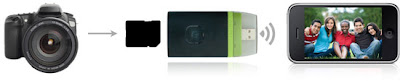
AirStash is the name given to this wireless flash drive which support up to 32GB SD card to use as storage and you can use it with WiFi enabled gadgets. Just connect your WiFi enabled gadgets to your AirStash and instantly surf and stream your media files through your web browser. No software or application installation is required. It came with a built-in rechargeable lithium polymer and you can charge it via USB connector to computer or powered hub. Now you can stores your movies, music, photos, and documents and wirelessly shares them with your WiFi enabled gadgets.
The "Emmerse" concept by Dan Carrillo is another interesting futuristic gadget. The system uses glasses, a wristband, and a clampable keyboard. In the glasses, you will see text of the person you're conversing with, complete with tone and icons. With the bracelet you can type what ever you want and it will spoken aloud and it can also display your text on it's back if you want it in a silent mode.
Another interesting gadget at the Consumer Electronics Show(CES) for this year. Hydrofill MiniPak Gadget Charger allows you to charge your electronics via USB using fuel cell technology and it was developed by Singapore company called Horizon Fuel Cell Technologies. This innovative gadget charger extracts the hydrogen from water and stores it in special cartridges, which are then placed inside the Hydrofill MiniPak. I hope it's not too expensive. According to the company:
The HYDROFILL is the first step towards private refueling of new generations of fuel cell electric vehicles. Fuel cell technology can greatly improve the features and usability of many battery or engine-powered devices, and create the possibility for lower cost electric cars that drive longer distances and recharge instantly.
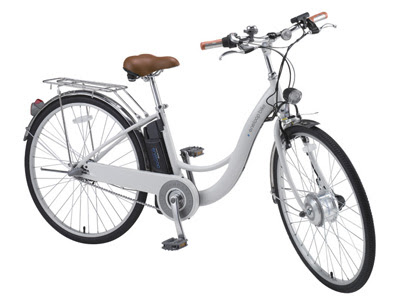
Green technology is everywhere at the Consumer Electronics Show 2010. One of them that attract me is the Sanyo's 'eneloop bike' which win the best of innovations in the eco design and sustainable technology category. The bike has been designed to be the industry's first to conform to the newest standards, offering a "Power-up Mode" assist ratio of up to 1:2 making riding the bicycle more comfortable, a new "loop charge function" that generates electricity and charges the battery while in use, and a two-wheel drive system provides a safer, more stable ride. The eneloop bike is available in the U.S. through independent bicycle dealers and specialty retailers, with a suggested retail price starting at $2,299.95. Check out video below.
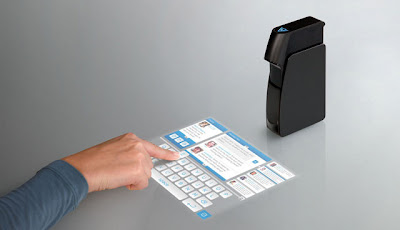
Light Blue Optics(LBO) announced its first product - Light Touch - an interactive projector that turns any flat surface into a 10" touch screen. The Light Touch is capable of projecting WVGA sized, auto-focusing images via its proprietory holographic laser projection technology (HLP), and it detects for touch using an infra-red sensing system. It also features WiFi and Bluetooth, allowing internet connectivity and the use of various bluetooth devices.
A CSR or Customer Service Record is a copy of how your telephone records appear in the telephone company's database. It contains information about each separate line charge (i.e. type of service, federal access charge, number portability charge, calling blocks on the line, 911 charge, etc.) that encompasses your monthly service charge on your bill.
In addition, a CSR reveals the service location of the account, the billing address, additional directory listings, PIC designations, hunting order, features that are being charged and on which line these features appear, calling plans that may include monthly charges, and taxes applied to each of the items on the record.
"Customer Service Record" is the most commonly used term for the internal record of your account. Others may include a "2733" or "PBX/Key/Multiline" record. (SBC) Some LECS use the term "Service Record" or "Billing Services Record" while others have no record at all. These would include the Mom and Pop telephone companies and CLECS. They can usually type them manually with the information you request.
Universal Service Order Codes (USOC) Customer Service Records are written in codes, commonly called USOC, or Universal (or Uniform) Service Order Codes. These codes are literally a foreign language to most, so allow yourself plenty of time to become familiar with the USOC codes used by your local carrier. A more in-depth discussion of USOC codes will be discussed in a future issue of this newsletter. At TelCon Associates, we've developed a database of over 10,000 USOC codes. CONTACT US for information on this valuable auditing resource.
The Four Main Sections of the CSR
A typical CSR is divided into four sections: The Header Record Section, the List Section, the Bill Section, and the S&E Section. Below you'll find a summary of what each section contains.
The Header Record Section This Header Record section is found at the top of the CSR, and details information about the CSR and the account itself. While CSR's do not always contain identical information, generally the header section will include: the print date, billing period, directory, class of service (business or residential), customer identification code, account number, USOC code and quantity of service items, description of service, unit rate, total monthly charge, and tax. The following two sections of the CSR contain important information about your company.
The List Section The List section identifies whether or not the account is listed in the white pages of the telephone directory, as well as how the listing reads. Ironically, there is an extra charge for non-published listings, unless there is already another account listed at the same service address. The code NLST indicates that it is NOT listed in the the telephone directory although it still may be listed with directory assistance operators. SIC defines the service industry for proper Yellow Pages headings.
The Bill Section The bill section of the CSR includes: bill name (BN1), bill address (BA) and tax area (TAR) for the account. The billing address is oftentimes different from the bill name.
The Service and Equipment Section This section is the most important part of the CSR. Since this area lists all charges associated with each phone line, the bill section is also the area where USOC and nomenclature translations are necessary, in order to identify the exact line items. It is this area of the CSR where you will spend the bulk of your auditing time. Obtaining and reviewing CSR's is an important part of the telecom auditing process. A thorough job can be a time consuming and tediousHealth Fitness Articles, but the cost savings and increased efficiency is well worth the time and effort.